Computer Enclosures for Hazardous Environments: What to Consider
Computers, monitors, touchscreens, and other electronics help keep industrial processes running. But in facilities where flammable gases, vapors, combustible dust, or other hazardous materials may be present, installing this equipment requires special care.
A computer enclosure for a hazardous environment must be selected based on more than its strength or ability to resist dust and water. The area’s hazard classification, equipment requirements, enclosure construction, and protection method all matter.
In some applications, a properly designed purged and pressurized enclosure system may allow certain standard electronics to be used in a classified hazardous location. However, the complete system must meet the requirements for that location.
Understanding Hazardous Location Computer Enclosures
A hazardous location computer enclosure is part of a system designed to protect electronic equipment in an area where flammable gases, vapors, combustible dust, or fibers may create a fire or explosion risk.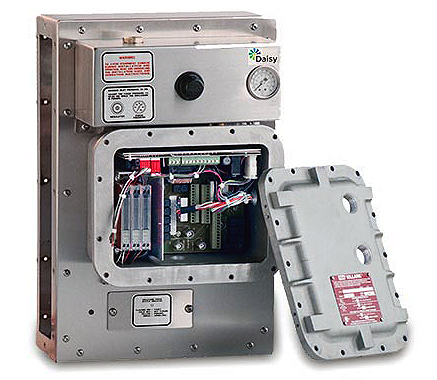
These areas are different from general harsh industrial environments.
A dusty manufacturing floor, for example, may require a ruggedized computer enclosure to protect against airborne contaminants. But if the dust is combustible and the area is classified as hazardous, additional safety requirements apply.
A NEMA 4 or NEMA 4X rating alone does not mean an enclosure is approved for a classified hazardous location.
The complete installation must be suitable for the specific hazards present.
Hazardous-Area Classifications
Before selecting an industrial enclosure, the facility’s documented hazardous-area classification must be reviewed.
Under the Class and Division system, hazardous locations are commonly grouped by the type of material present.
Class I: Flammable Gases and Vapors
Class I locations involve flammable gases or vapors that may be present in the air.
These conditions may occur in certain chemical processing, oil and gas, or other industrial operations.
Class II: Combustible Dust
Class II locations involve combustible dust that may create an ignition hazard.
These conditions may occur in some grain handling, food processing, material handling, and manufacturing applications.
Class III: Ignitable Fibers and Flyings
Class III locations involve easily ignitable fibers or flyings.
Certain textile, wood-processing, and similar industrial operations may present these conditions.
Hazardous locations are also divided according to how likely hazardous conditions are to be present. Depending on the classification system, the facility may use Division or Zone designations.
The equipment and protection method must match the applicable classification, material group, temperature requirements, and other installation conditions.
How Does a Purged Computer Enclosure Work?
A purged computer enclosure uses a purge-and-pressurization system to help prevent hazardous materials from entering the protected space.
The system uses a suitable protective gas, often clean instrument air, to purge the enclosure and maintain the required internal pressure.
In an approved system, this protection method may allow certain electronics that are not individually rated for the surrounding hazardous location to be installed inside the enclosure.
However, the enclosure alone does not provide this protection. The complete system may include:
- A suitable enclosure
- A properly selected purge-and-pressurization control system
- A reliable supply of protective gas
- Pressure monitoring and required safety controls
- Suitable electrical connections and accessories
- Equipment and installation methods approved for the application
The correct system depends on the area’s classification and applicable safety requirements.
Intrinsically Safe Computers vs. Purged Enclosures
An intrinsically safe computer is designed and approved so that its electrical and thermal energy cannot cause ignition under the conditions covered by its approval.
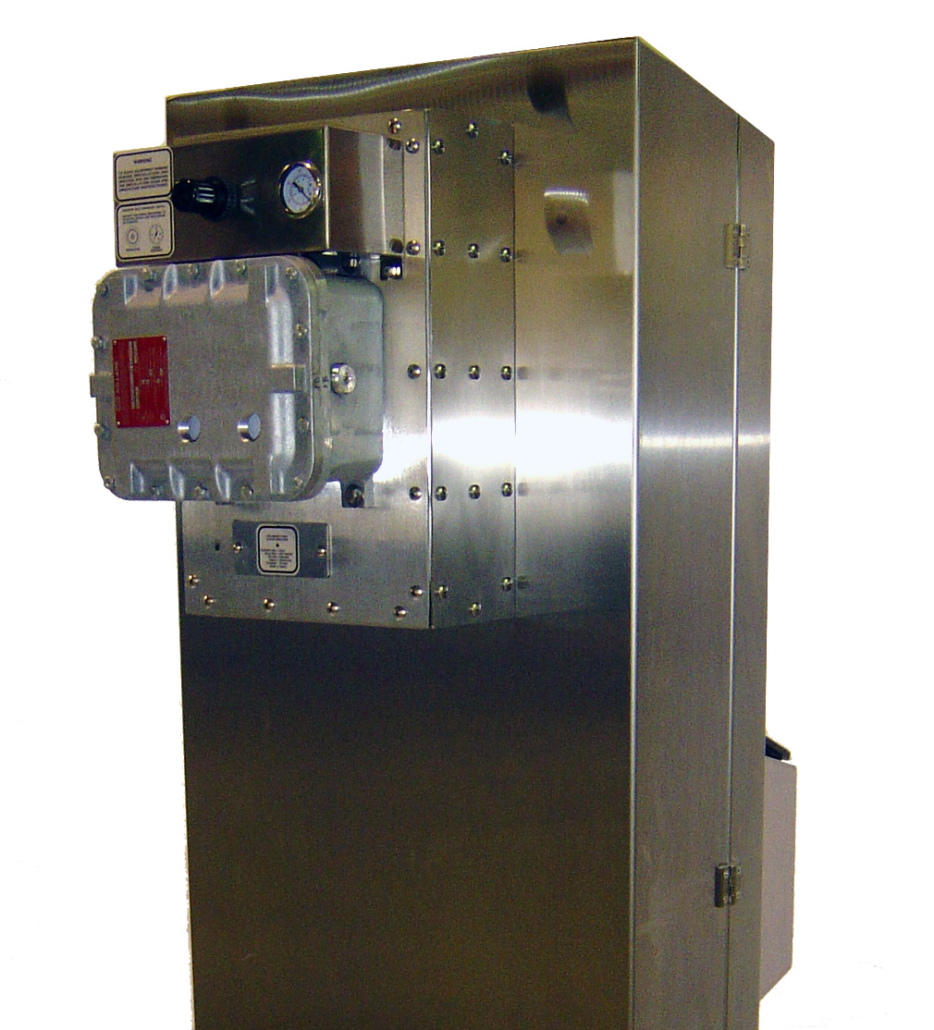
A purged and pressurized enclosure uses a different protection method. It relies on an approved system that maintains protective conditions inside the enclosure.
Both approaches may be used in certain hazardous locations, but they are not interchangeable.
The right choice depends on the area’s classification, the equipment being installed, and the requirements of the complete installation.
Can a Ruggedized Computer Enclosure Be Used in a Hazardous Location?
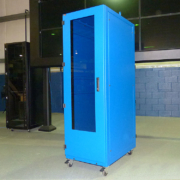
A ruggedized enclosure is designed to protect electronics from demanding physical or environmental conditions, such as dust, dirt, water, and impacts.
That does not automatically make it suitable for a classified hazardous location.
For example, an industrial PC enclosure designed for a dusty environment may help protect equipment from ordinary airborne particles. But an area containing combustible dust may require a specific hazardous-location protection method.
Before selecting an enclosure, confirm whether the area is classified as hazardous and what requirements apply.
4 Considerations When Selecting a Purged Computer Enclosure
1. Enclosure Construction and Materials
The enclosure must support the requirements of the purge system and the surrounding environment.
Depending on the application, steel or stainless steel construction may be considered.
NEMA 4 enclosures can provide protection against dust and hose-directed water, while NEMA 4X enclosures add corrosion resistance.
Stainless steel may be a practical choice where moisture, washdowns, or corrosive conditions are present.
The enclosure’s seals, doors, latches, cable entries, and other features must also be suitable for the complete purge-and-pressurization system.
A NEMA rating should not be used as a substitute for hazardous-location approval.
2. Keyboards, Touchscreens, and Input Devices
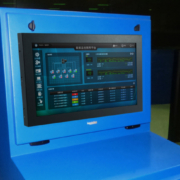
Operators may need to use keyboards, pointing devices, monitors, or touchscreens in the hazardous area.
These devices require careful selection because the equipment used outside the protected enclosure may need its own hazardous-location approval.
Depending on the application, intrinsically safe or other suitably rated input devices may be required.
Connections, barriers, wiring, and installation methods must also be evaluated as part of the complete system.
3. Temperature Control and Thermal Management
Computers and other electronics generate heat while operating.
A purged enclosure may also require thermal management to keep equipment within its recommended operating temperature range.
In some applications, a vortex cooling system may be considered. Other solutions may be appropriate depending on the equipment, surrounding conditions, and system requirements.
Cooling and purge functions are not interchangeable. A cooling device should not be assumed to provide the pressure control or safety functions required by a purge-and-pressurization system.
4. Maintenance and Equipment Access
Maintenance is an important part of operating a purged computer enclosure.
Opening the enclosure can affect the protective conditions inside it. Personnel must follow the approved system’s operating and maintenance procedures before opening the enclosure, servicing equipment, or restoring power.
Depending on the system and location, these procedures may include verifying area conditions, isolating power, checking protective pressure, and completing the required purge cycle before restarting equipment.
The specific steps must come from the approved system documentation and the facility’s safety procedures.
Information to Gather Before Selecting an Enclosure
Before discussing enclosure options, gather the information needed to evaluate the application.
Key details include:
- The documented hazardous-area classification
- The gases, vapors, dusts, or fibers present
- The equipment being installed
- Equipment dimensions and heat output
- Required keyboards, monitors, and other input devices
- Ambient temperature and environmental conditions
- Moisture, washdown, and corrosion exposure
- Power, wiring, and cable-entry requirements
- Applicable approvals and facility safety requirements
These details help determine whether a purge-and-pressurization system or another approved protection method may be suitable.
Find the Right Protection for Your Application
Installing electronics in a hazardous location requires careful planning. The enclosure, equipment, protection method, and installation must all be suited to the conditions present.
ITSENCLOSURES can help review your equipment, environmental needs, and available enclosure configurations. For classified hazardous locations, the complete solution must also be reviewed and approved by qualified personnel responsible for the installation.
Explore our industrial computer enclosures or contact ITSENCLOSURES to discuss your equipment and application.
 ITSENCLOSURES, 2022
 Copyright 2023